
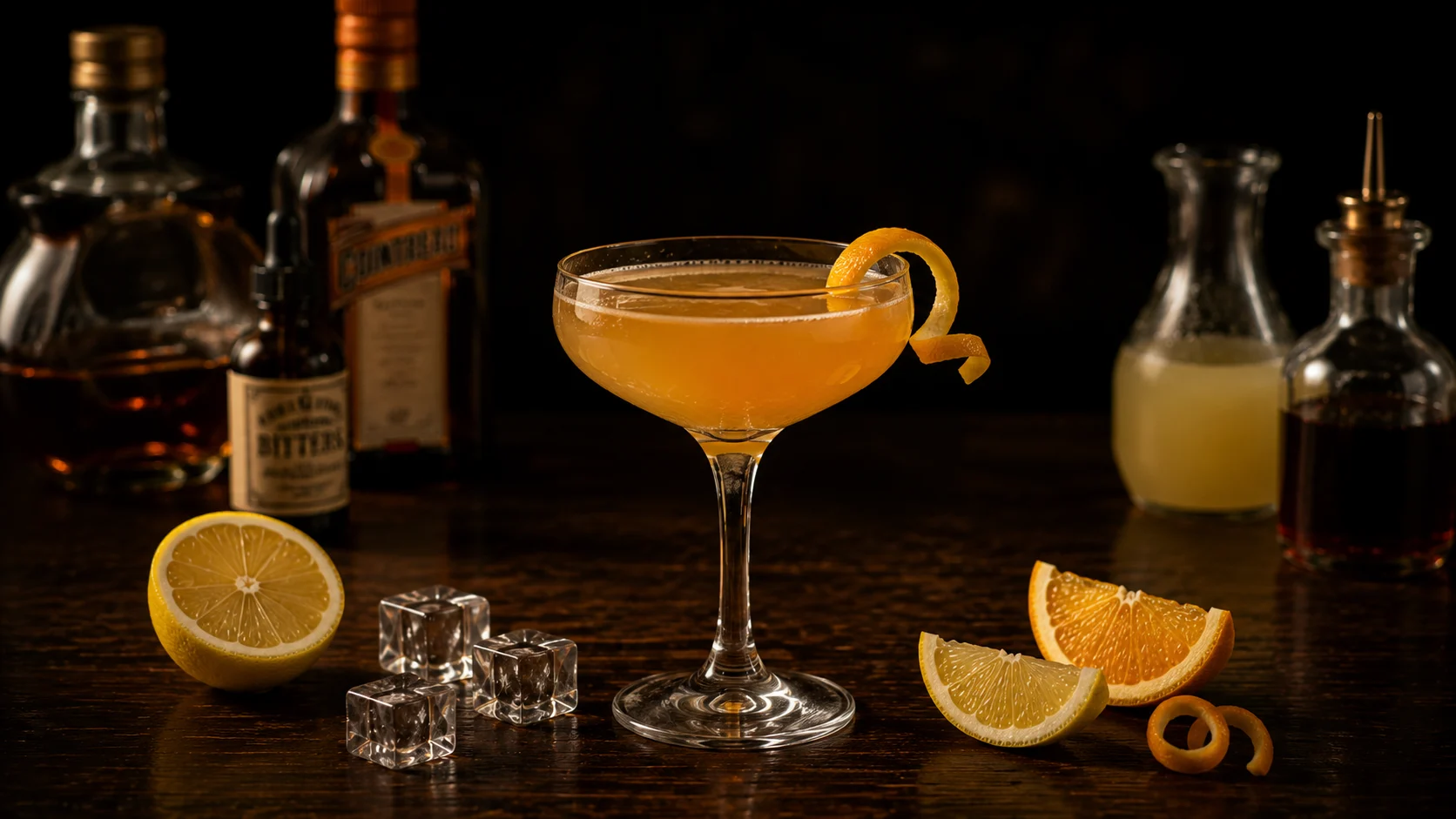
How to make Sidecar
The Sidecar is a classic brandy cocktail made with cognac, orange liqueur and fresh lemon juice. Shaken and served straight up, it combines rich fruit, bright citrus and a dry, warming finish.
(0 ratings)
Ingredients
Cognac
50 ml
triple sec
25 ml
lemon juice
25 ml
fine sugar
optional
for the rim
as needed
ice
optional
as needed
orange
optional
garnish
1
About recipe
Difficulty
Medium
Prep time
5 min
Glass type
Cocktail glass
Method
Shaken
Instructions
-
1
Chill a coupe or cocktail glass.
-
2
Run a lemon wedge around half or all of the glass rim and dip it into fine sugar, if desired.
-
3
Fill a cocktail shaker with ice cubes.
-
4
Add the cognac or brandy, Cointreau or triple sec, and fresh lemon juice.
-
5
Shake vigorously for about 10–15 seconds until well chilled.
-
6
Double-strain the cocktail into the prepared glass.
-
7
Garnish with an orange twist.
What does a Sidecar taste like?
A well-balanced Sidecar tastes tart, strong and lightly sweet. Cognac provides notes of dried fruit, vanilla, oak and warm spice, while orange liqueur adds sweetness and the aroma of fresh and candied citrus peel. Lemon juice gives the drink its sharp structure and keeps the richer ingredients from feeling heavy.
The cocktail should finish dry and clean rather than sugary. Proper dilution softens the alcohol and creates a smooth texture, but the brandy should remain clearly noticeable. Some versions have a sugar-coated rim, which makes the first sip sweeter and creates extra contrast with the lemon.
The history of the Sidecar cocktail
The exact origin of the Sidecar is uncertain. It is generally associated with London or Paris around the end of the First World War, and early printed recipes appeared during the 1920s. Several bars and bartenders have been linked to its creation, but no single claim has been conclusively proven.
The drink belongs to the sour family and is closely related to older combinations of spirit, citrus and orange liqueur. Its name is often said to refer to the motorcycle sidecar, though the reason for that connection is not firmly established. Over time, it became one of the best-known classic cognac cocktails.
How a Sidecar is prepared and served
The Sidecar cocktail is shaken firmly with ice and strained into a chilled coupe or small cocktail glass. It is served without ice, usually with an orange or lemon twist. A sugared rim is traditional in some bars, but many drinkers prefer the cleaner, drier style of an unsweetened glass.
Fresh lemon juice is essential, as bottled juice can make the drink taste flat or harsh. A good orange liqueur should support the cognac rather than cover it. Common mistakes include adding too much sweetener, under-shaking the mixture or using a delicate brandy that disappears behind the citrus.
When to serve a Sidecar and popular variations
The Sidecar works particularly well as an aperitif, at cocktail parties or during cooler evenings. Its acidity pairs naturally with pâté, cured meat, soft cheese, roasted nuts and rich canapés. Because it is compact and spirit-forward, it is best served very cold and enjoyed before it begins to warm.
Brandy is the traditional base, though bourbon creates a related drink often called a Bourbon Sidecar. Some modern versions use aged rum, apple brandy or a small amount of spice syrup. Whatever the variation, the defining balance should remain clear: rich spirit, fresh lemon and restrained orange sweetness.
You might also like
Rate this recipe
Choose from 1 to 5 stars and optionally leave a comment.
Ratings and comments
(0 ratings)